
Lessons from Oceania: Indigenous Wisdom and Ecological Stewardship
Updated: Jun 10
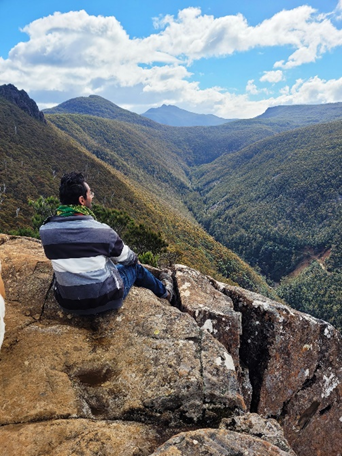
My recent journey through New Zealand (Aotearoa) and Australia began with an invitation to participate in a training on Adventure and Nature-Based Therapy in Tasmania. What unfolded was far more than a professional learning experience. It became a pilgrimage of sorts—one that invited me to reflect on healing, ecological conservation, Indigenous wisdom, active citizenship, and the future we are creating.
Healing Beyond the Therapy Room
The catalyst for my travels was a six-day training led by an Aboriginal guide and practitioners from Adventure Works Australia. We camped on sacred Aboriginal land, participated in ceremony, learned from the stories of the land, and explored what it might mean to “Decolonize Therapy.”
One of the most powerful insights was that healing does not happen in isolation.
While modern mental health systems often focus on the individual, Indigenous perspectives understand healing as relational. Wellbeing emerges through connection—with community, culture, ancestors, nature, and the land itself. Distress is often seen not merely as an individual problem, but as a symptom of disconnection from meaning, belonging, and relationship.

As mindfulness-based psychotherapist and wellbeing practitioner, I found this perspective both humbling and refreshing. It reminded me that prevention may be as important as treatment, and that community and connection are themselves forms of medicine.
Learning from the First Peoples
Being in Tasmania was also emotionally confronting because of its history.
For tens of thousands of years, Aboriginal people lived sustainably on the land before colonization devastated communities, languages, and traditions. At a museum in Hobart, I encountered a public apology acknowledging these injustices. Reading it brought tears to my eyes.
Today there are efforts to revive language, culture, and traditional knowledge, yet much has already been lost.

As an Indian, I could not help but think of our own Adivasi communities. Unlike Tasmania, many Indigenous traditions in India are still alive. Across the country, communities continue to live close to forests, rivers, mountains, and traditional ecological knowledge systems. Yet their ways of life are increasingly under pressure from rapid urbanization and industrialization.
How do we protect this living wisdom before it disappears?
As India strives toward economic growth, what might we lose if we fail to value the very people who have long been custodians of our ecosystems? Are we colonizing our own land and the people of the land?
From Exploitation to Stewardship
Throughout Australia and New Zealand, I encountered a culture of environmental stewardship and civic participation.
In Tasmania, I met people who had dedicated decades to environmental activism. Some had been involved in the historic movement to save the Franklin River; others supported initiatives such as the ‘Tasmanian Land Conservancy’, which acquires and permanently protects ecologically significant private land.


In a world where land is often treated as a commodity, such efforts embody a different ethic—one of stewardship, long-term responsibility, and care for future generations.
Across both countries, I heard stories of communities opposing destructive mining projects, protecting rivers, restoring forests, and safeguarding biodiversity. Some campaigns succeeded and others did not, but the larger message was clear: citizens have a responsibility to shape the future of their landscapes.
Could India learn from some of the mistakes of the Western developmental model rather than repeating them? Could we chart a different course?
Aotearoa: A Different Relationship with Nature
New Zealand offered another powerful lesson. Coming from India, many of its cities felt less like urban centers and more like forests interwoven with human settlements. Nature was everywhere—birds, rivers, open spaces, and native vegetation.
Experiencing this made me realize how normalized ecological deprivation has become in many urban environments. When access to nature becomes rare, we stop noticing its absence.
Environmental stewardship seemed woven into everyday life. Citizens participated in river restoration, habitat protection, and conservation projects. One inspiring example was Zealandia in Wellington, where native species are returning through long-term ecological restoration.
Equally impressive was the government funding available for citizen-led environmental and wellbeing initiatives. Imagine what might become possible if ecological restoration were seen not as an expense, but as an investment in collective wellbeing.
Living Off-the-Grid: Another Way Is Possible
One of the unexpected gifts of the journey was meeting families who had chosen to live off the grid.
In both Australia and New Zealand, I encountered people generating their own energy, harvesting rainwater, growing food, and organizing their lives around ecological principles. They were not withdrawing from society; they were experimenting with alternative models of living.
These communities represent a growing recognition that endless consumption does not necessarily lead to fulfilment. Their lives raised an important question: if progress is measured only by consumption, what happens to the values of simplicity, self-reliance, and connection?
Indigenous Wisdom for a Planet in Crisis
Perhaps the most inspiring aspect of New Zealand was witnessing the re-indigenization efforts, revival of Māori wisdom and culture.
Rather than being confined to museums, Māori perspectives are increasingly informing education, governance, healthcare, and environmental policy.

Several Māori concepts deeply resonated with me.
Karakia refers to prayers or intention-setting practices that create a shared sense of purpose and connection. I was particularly moved to learn that a karakia may be offered before felling a tree—a moment of gratitude and reverence that recognizes the tree as a living being rather than merely timber.
Kaitiakitanga, often translated as stewardship or guardianship, sees humans not as owners of nature but as caretakers responsible for future generations.
Whenua means both “land” and “placenta.” The symbolism is profound: just as a child is nourished through the placenta, human life is nourished by the land. What comes from the land eventually returns to it.
During a visit to a public school in Auckland, I watched children from diverse backgrounds perform Kapa Haka, the Māori performing arts tradition combining song, movement, storytelling, and ceremony. More than performance, it is a living expression of identity, memory, and ancestral knowledge.
One Māori teaching stayed with me throughout the journey:
“We belong to the land; the land does not belong to us.”
Reimagining Conservation and Education
New Zealand has become internationally known for granting legal personhood to rivers. Imagine a river, mountain, or forest being recognized as a living entity with legal rights and protections. This reflects a radically different relationship with nature—one rooted in respect rather than ownership.
I also encountered efforts to restore Indigenous land rights and protect culturally significant places. I was particularly impressed by New Zealand's Treaty of Waitangi (signed in 1840) settlement process, through which billions of dollars in compensation and significant areas of ancestral land have been returned to Māori communities.
Similarly, in both Australia and New Zealand, governments, foundations, and communities are increasingly investing in rewilding, conservation, and ecological restoration.
Another lesson came from observing how environmental awareness is cultivated from childhood. Through initiatives such as EnviroSchools and Outdoor Education programs, children learn not only about nature but through direct participation in environmental projects.
Children care for and protect what they learn to love.


Growing Food, Growing Community
In Melbourne, I visited two remarkable urban farming initiatives: CERES Community Environment Park and Collingwood Children’s Farm.
These projects demonstrate that food production, environmental education, ecological restoration, and community building can coexist in the heart of a major city.
CERES transformed a degraded industrial site into a thriving environmental education centre, urban farm, and community hub. Likewise, Collingwood Children’s Farm provides opportunities for people to reconnect with food systems, animals, and nature.
They reminded me that ecological change does not always begin in remote wilderness. Sometimes it begins in cities—through community gardens, local food networks, and places where people reconnect with the sources of their food and a sense of belonging.
Beyond Policy: The Need for Moral Imagination
The deepest reflections from this journey were not ultimately about conservation projects or environmental policies.
They were about consciousness.
The ecological crisis is not merely a technological challenge; it is also a moral and cultural one. What kind of future are we imagining? What values guide our decisions?
What we need is moral imagination—the ability to envision a future in which ecological wellbeing, social justice, human dignity, and economic prosperity are understood as interconnected rather than competing goals.
Equally important is the evolution of mass consciousness. No policy or technological innovation can succeed without a corresponding shift in collective awareness.
If success continues to be measured solely through consumption, environmental degradation will continue. But if enough people begin to value stewardship, community, simplicity, and interdependence, entirely new possibilities emerge.

Redefining the Dream
Perhaps the greatest challenge before India, with its 1.5 billion people, is not how quickly we develop, but how we define development itself.
If we attempt to replicate the consumption patterns of the industrialized West, we will require multiple planets to sustain that lifestyle.
What, then, is the Indian dream?
Can we create a model of development rooted in our own cultural wisdom, ecological realities, and spiritual traditions—Dharma in its truest sense? Can we draw from both ancient knowledge and modern innovation? Can we create prosperity without sacrificing the natural systems that sustain life? How do we move, as a nation, from survival mode to service mode?
The Question That Remains
At the end of the journey, one question remains with me:
What is my role in all of this?
It is easy to criticize governments, corporations, and systems. The more difficult task is asking where we ourselves are being called to contribute.
My travels across Aotearoa and Tasmania did not provide simple answers. But they did reveal something important: another way is possible.
I met people restoring rivers, protecting forests, opposing destructive mining projects, growing their own food, living off the grid, reviving Indigenous knowledge, and nurturing communities rooted in care for future generations.
Perhaps the invitation before all of us is not merely to consume the future, but to become custodians of it.
The generations who inherit this Earth will live with the consequences of our choices.
May they have reason to thank us rather than forgive us!
Written by -
Vipul Shaha, Pune, India
Psychotherapist,
Mindfulness and
Nature-based Facilitator
@mindful_being_india
References and Resources -
1. Adventure Works Australia
2. Public Apology Hobart Museum
3. Decolonizing Therapy book
4. The Giants – a film on the co-founders of the Green Party and the Environmental Movement Activists in Australia
5. Story of the Wilderness Society and Franklin River Campaign –
6. Zealandia, Urban Conservation Project, Wellington, NZ
7. Enviro Schools Program
8. River as Legal Entity (New Zealand)
9. Land Conservancy Project, Tasmania
The Story of Land Reparations and Healing in New Zealand
11. Māori knowledge–based wellbeing and professional support platform for psychologists, educators and healthcare workers
CERES Farm / Collingwood Children's Farm, Melbourne


Comments