
Travel as Transformation
-Vipul Shaha, May 2026
“There are no strangers, only friends waiting to be discovered.”
When I was 15 years old, my parents put me on an airplane to the United States of America for a year-long cultural youth exchange program. Until then, I had grown up in a small village in central-west India, studying in a local Marathi-medium school and barely speaking English. I had never traveled abroad before — I had barely even imagined being on an airplane.
That journey became the beginning of a completely different life.
After more than 36 hours of travel and changing three airplanes, I finally landed in America. I still remember the feeling of arriving at the Minneapolis airport — exhausted, overwhelmed, searching for my host family a completely unfamiliar world. And then suddenly, there they were: a welcoming family, a church van, warm smiles, and an energy of excitement that made me feel received in a foreign land.
From the airport, they took me straight to the Mall of America!
For a village boy who had never seen snow, barely spoke English, and had grown up in a traditional Indian setting, it felt like stepping into another universe.

That one year in America — attending high school and living with two different host families — became deeply formative for me. Life was never going to be the same again. When I returned to India, I experienced reverse cultural shock. I found it difficult to readjust to my own family, my village, and the familiar cultural environment I had once taken for granted.
Over time, I realized I had to reconcile two very different worlds that had both become part of who I was.
My host families in America were church-going Christians in rural Minnesota, very different from my own Jain cultural roots in India. At the time, they were also strong supporters of the George Bush government — another contrast to the worldview I had grown up around. Yet despite these differences, they welcomed me into their homes and lives with warmth and generosity.
Years later, I was invited back for the wedding of my second host brother — the same little boy I had once babysat and shared mischievous moments with. Seeing him now as a grown man getting married was deeply moving. It reminded me how relationships formed through travel can become lifelong bonds.
Somewhere along the way, I stopped seeing myself as only a village kid from India. I began to understand that I was part of a global village — that my friendships, family, and sense of belonging could stretch across continents.
There was no looking back.
Since then, I have traveled to more than 20 countries around the world. I even returned to America for higher studies and continue to go back because it feels like a second home. Over the years, I have increasingly seen my role as being a bridge — integrating the best of what India, America, and the wider world have to offer.
A bridge between:
the traditional and the modern
the scientific and the spiritual
the Eastern and the Western
the academic and the experiential
More recently, while traveling through New Zealand and Australia (for an Adventure and Nature based Therapy program), I realized something important: travel itself had become my refuge, my retreat, and one of my greatest tools for personal transformation.

Travel continues to teach me in ways no classroom ever could.
It has taught me how to live with constant uncertainty and change. Every journey demands adaptability — new languages, unfamiliar systems, changing plans, and unexpected situations. It has made me more open to exploration, novelty, experimentation, and adventure.
Travel constantly shifts my perspective. By encountering different cultures and ways of living, my worldview becomes more expansive. It invites me into both critical and appreciative reflection — not only about myself, but also about my family, community, culture, and country. It deepens my self-awareness.
Travel has also taught me humility.
There is something profoundly human about arriving in a foreign place and needing help — asking strangers for directions, trusting local advice, relying on kindness, and admitting that you do not know. Vulnerability becomes part of the journey.
Living out of a suitcase has also taught me minimalism. When your bed, food, weather, language, currency, and routines are constantly changing, you begin to realize how little you actually need. Travel taught me how to live simply, prioritize what is essential, and let go of unnecessary comforts and expenses.
At times, travel feels almost like a pilgrimage.
It breaks mechanical patterns of living and interrupts the automated routines we unconsciously fall into. It creates space to rethink life, re-evaluate priorities, and reconnect with what truly matters.
Again and again, travel asks me:
What is my anchor when everything around me keeps changing? What remains constant within me?
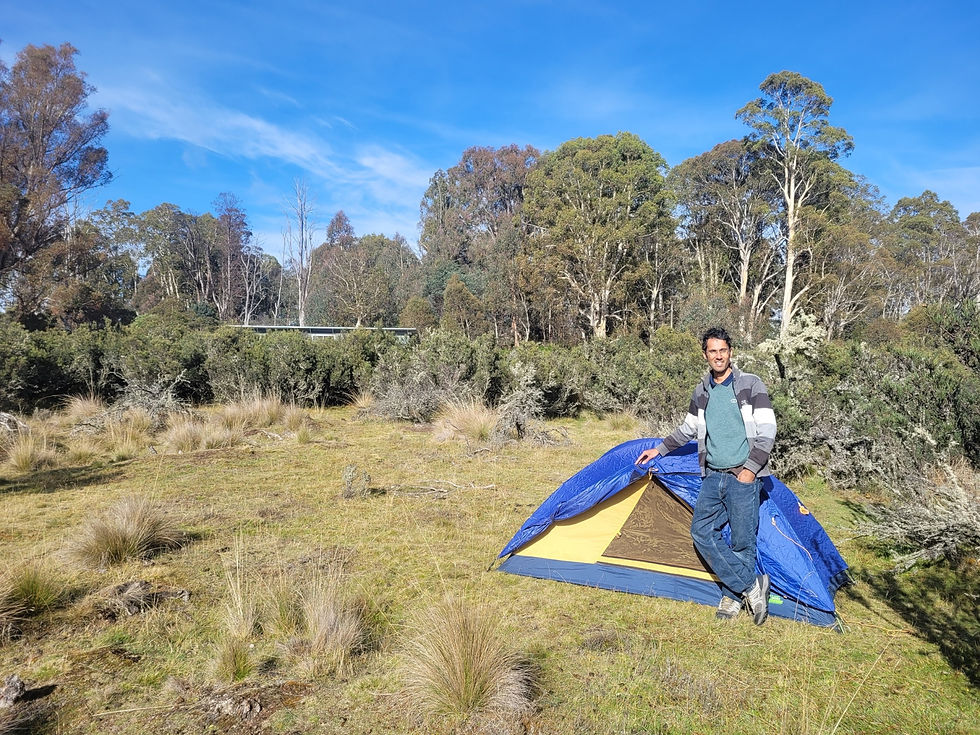
It has also taught me detachment. While traveling, I often form deep connections with people, places, and moments — and yet I also learn to hold them lightly. To be fully present, and then let go when the time comes.
Travel has made me more conscious of how I show up in the world:
How can I contribute? How can I serve?
How can I bring kindness, warmth, and presence into the spaces I enter?
One particularly transformative journey I undertook was a week-long bicycle trip through rural Rajasthan with a small group of friends. We deliberately chose to travel without an itinerary, without money, without cell phones, identity cards, maps, or even food supplies. We simply set off into the unknown with one shared intention: wherever we went, we would contribute in some way to the local community and rely on the generosity of the people we met for food and shelter.
What unfolded during that journey deeply touched and transformed me.

Again and again, we encountered extraordinary kindness and hospitality from complete strangers. People who themselves had very little in terms of material wealth opened their homes, shared their food, and welcomed us with warmth and trust. That journey shattered many assumptions I had unconsciously carried about security, scarcity, and human nature. It reminded me that generosity is not dependent on wealth and that some of the richest human experiences emerge when we let go of control and allow ourselves to rely on human connection.
For me, travel is no longer about tourism alone. It is about meaningful human and more-than- human connection.
Some of the greatest lessons have come from strangers — people I may never meet again, yet who offered unexpected kindness, generosity, and care. Through these experiences, many of my biases and prejudices slowly began to melt away.

I increasingly feel that there are no strangers — only friends waiting to be discovered, only brothers and sisters walking each other home.
And perhaps one of the deepest realizations travel has given me is this:
Wherever I am is the right place. The right people. The right circumstances. The right time.
Less fear of missing out. More joy of missing out — JOMO.
A growing acceptance of what is, trust in the unfolding of life, and gratitude for the journey as it comes.
In the end, somehow, it all works out.
A Note on Servas International
One community that deeply resonates with this spirit of meaningful travel and global friendship is Servas International — a global peace and hospitality network founded on the idea of building peace through human connection, cultural exchange, and travel.
In many ways, Servas shaped my life long before I ever boarded an airplane to America.
While growing up in our village in India, my family hosted many Servas travelers from around the world. For my brother and me, this became an early window into the wider world. Listening to stories from different countries, cultures, and ways of living gave us a kind of global exposure that was rare in our rural environment and planted seeds of curiosity, openness, and connection from a young age.

Years later, while traveling internationally myself, I continued to meet people through Servas in different parts of the world. Some of the most inspiring human beings I have encountered in my travels have been through this network. Many of them are deeply engaged in community-building, peace work, environmental action, sustainability initiatives, education, social service, and conscious living.
What I appreciate most about Servas is that it encourages travel not merely as tourism, but as an opportunity for genuine human connection, dialogue, learning, and shared humanity. More about Servas can be found here -

-Vipul Shaha, India
Psychotherapist, Educator,
Mindfulness and Nature-based Facilitator
Pune, India
@mindful_being_india


Reading about travel as transformation really made me reflect on how much stepping out of your routine can change the way you think and reset your mindset in unexpected ways. I remember going through a really intense academic period where I was juggling multiple deadlines at once, and even simple tasks started feeling overwhelming and disconnected from anything meaningful. I used Essay Writing Service during that time to handle a few writing-heavy assignments so I could actually focus on processing my coursework and not just racing against deadlines. It made me realize that, just like travel, sometimes you need space and support to step back and come back with a clearer perspective.